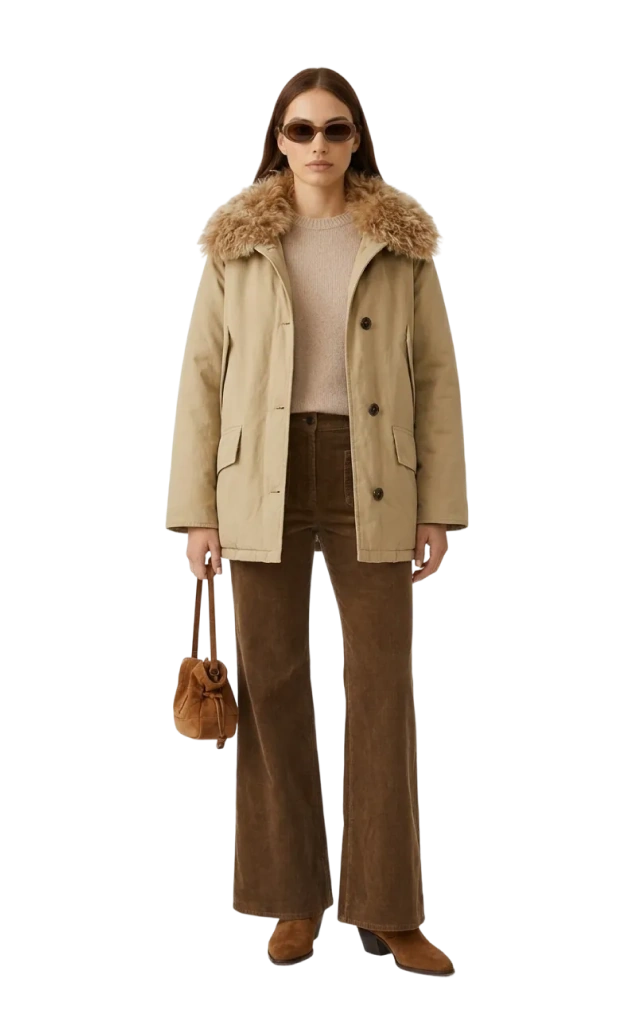
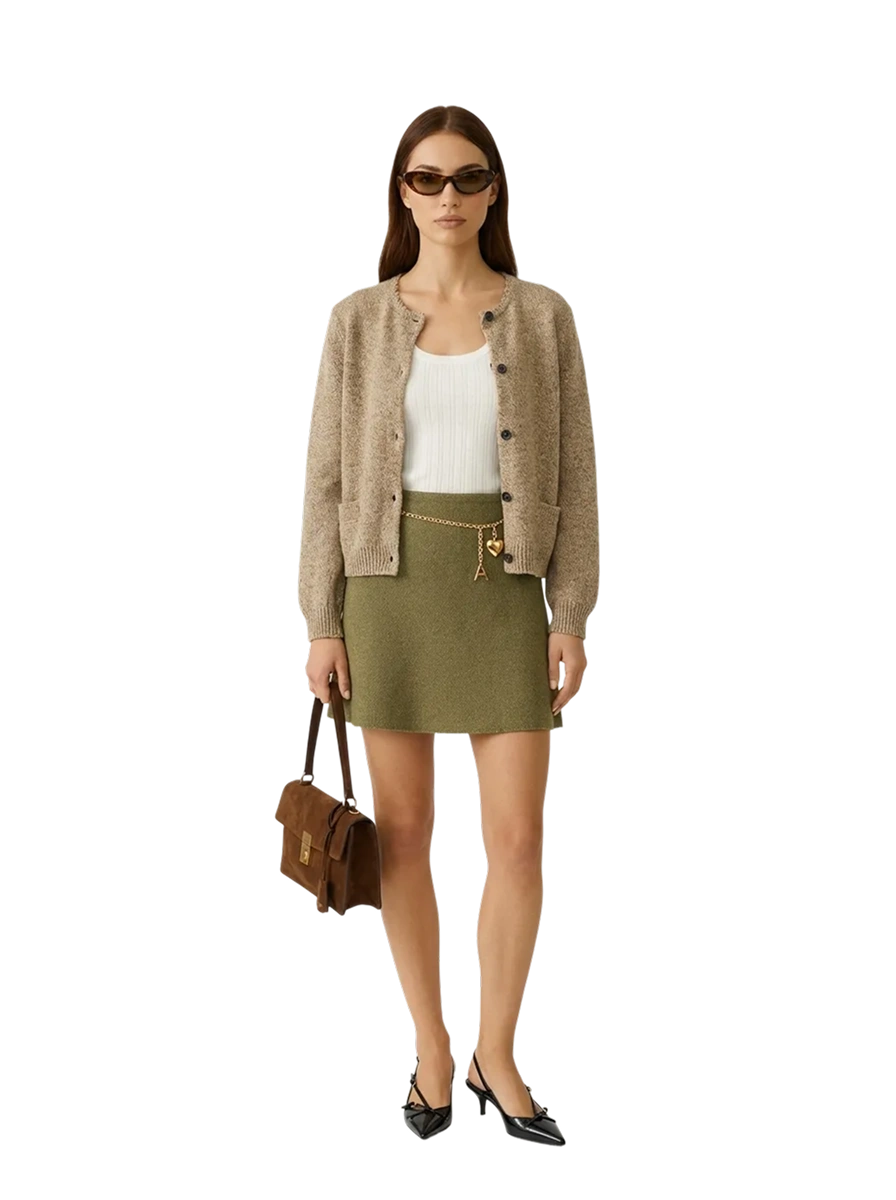
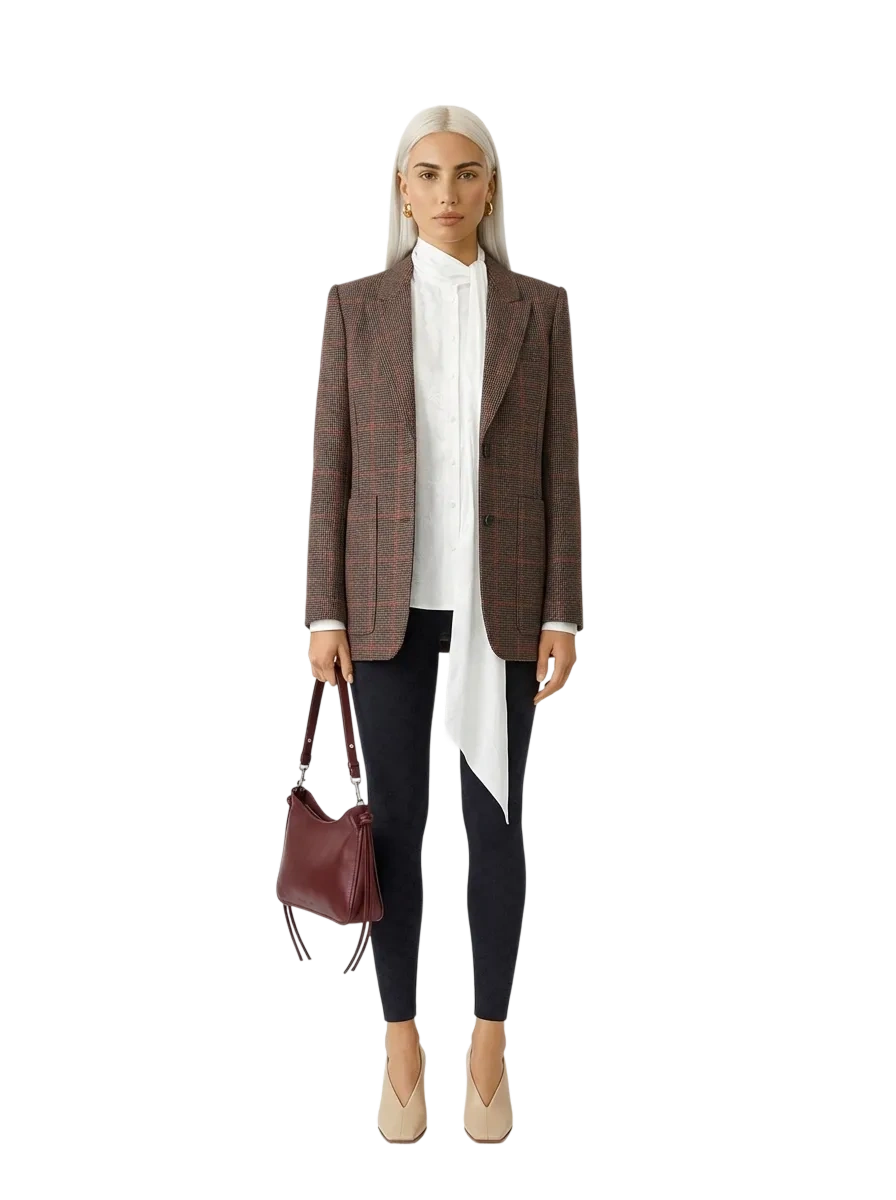
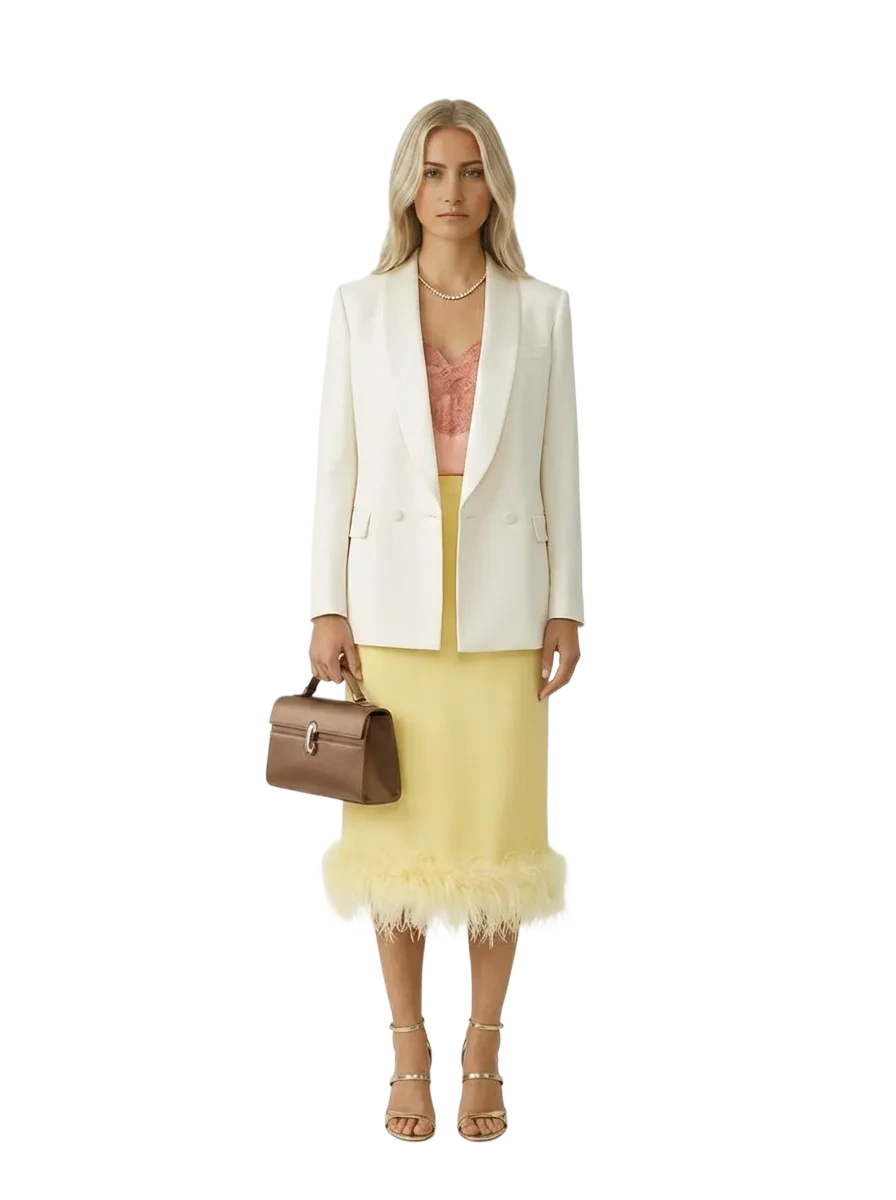
From a scattered MVP to an integrated shopping & styling ecosystem, powered by AI.
Role
Lead Product Designer (sole designer)
Team
2 frontend · 2 backend 1 QA · Founder
Platforms
iOS app · Web (desktop + mobile) Internal CRM
Timeline
May ’25 – Sept ’26
The problem
The features were there. The product wasn't.
Vêtir launched with a big vision: shopping, professional styling, personalization, and AI. The ingredients were there, but the experience had grown feature by feature, without a clear product language connecting everything together.
Shopping wasn't as effortless as it could be. Styling was difficult to recognize as a core part of the experience. And the early AI Stylist felt more like search than an intelligent styling partner.
Across the product, inconsistent visual patterns, weak hierarchy, fragmented navigation, and disconnected experiences made Vêtir feel more like a collection of features than one product.
As the sole designer, I set out to change that.
The goal wasn't simply to make Vêtir look more luxurious. It was to make the product easier to understand, easier to use, and much clearer about the value of styling and personalization at its core.
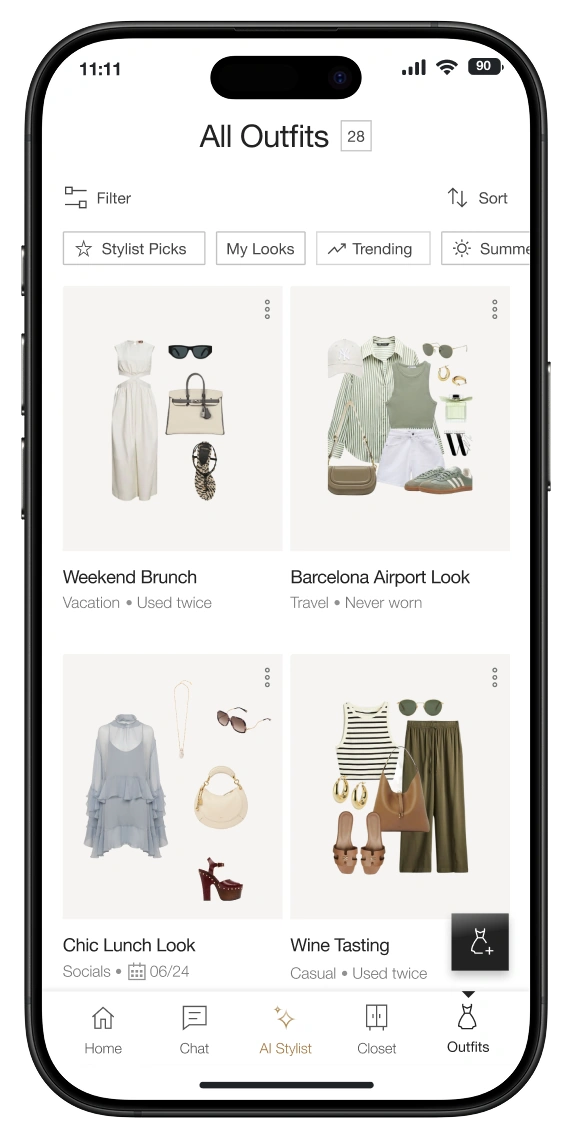
I rebuilt it module by module, inside the existing roadmap. As the product evolved, so did the experience—from a rudimentary AI layer and fragmented shopping flows toward richer styling experiences, including AI-assisted outfit creation and avatar try-ons.
At a glance
190
stylists on the platform, up from ~14 when I joined
200+
components brought into one shared system
↑
organic search traffic and orders after the design overhaul
Before
The scattered MVP.
Vêtir had strong individual features, but no shared language connecting them.
The product had grown quickly, and every new feature added another pattern. The result was an experience that felt inconsistent visually, structurally, and functionally.
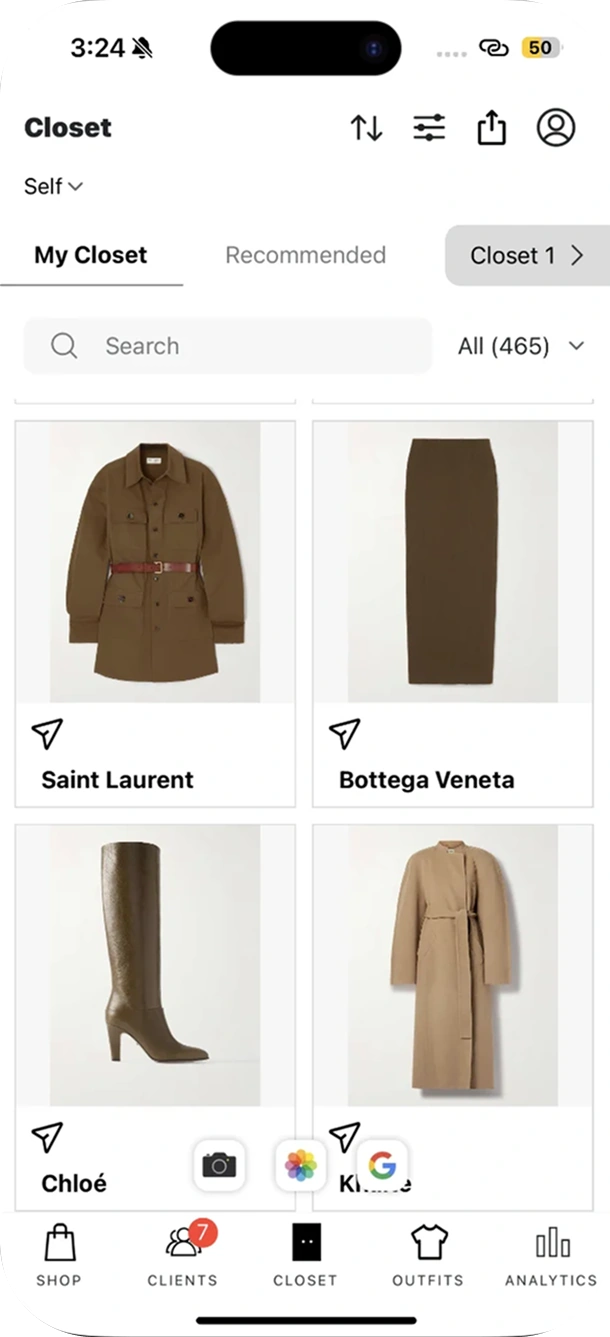
ios / closeteverything in one listowned or wishlist?stylist picks get lost
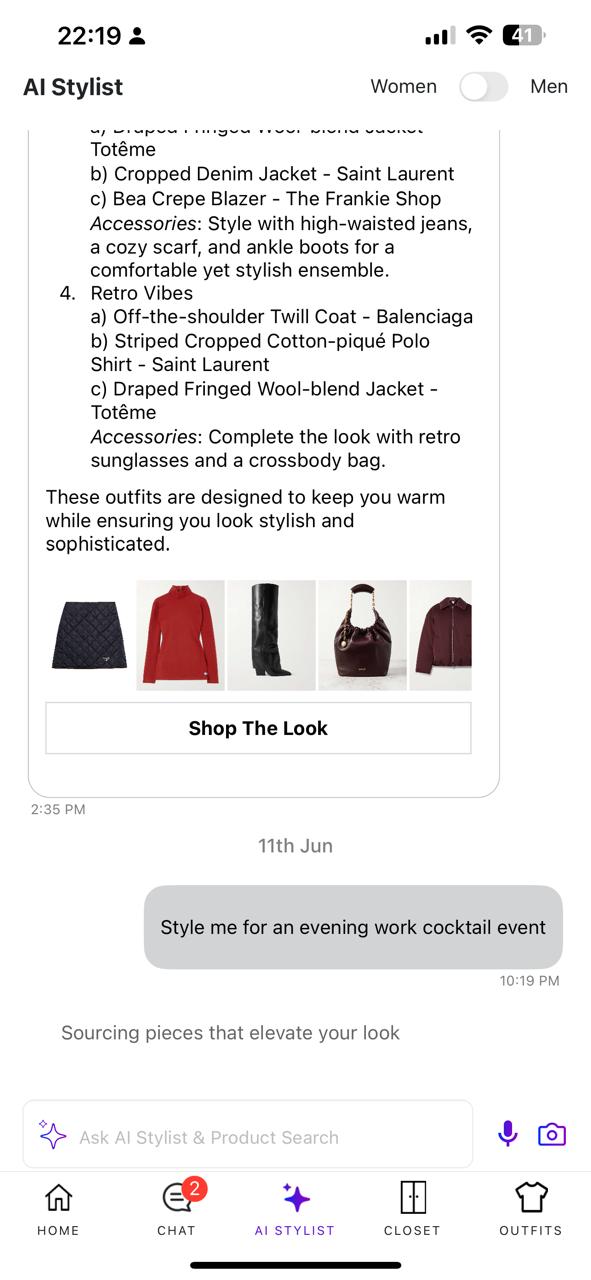
ios / aiAI help lived in a separate chatresults felt like search, not stylingproducts, not styled looks
Visually
No shared language. The app used Helvetica, the web mixed Libre with assorted fonts, and there was no type hierarchy, which also hurt SEO. For a luxury fashion platform, the result felt more mass-market than it should have.
Structurally
Engineering had developed its own component set independently of design. Every new feature introduced another pattern, making the experience harder to keep coherent.
Functionally
Strong features in silos. Shopping and styling both existed, but neither felt as seamless as it could be. Navigation hid parts of the product. Important functionality was difficult to discover. And the styling proposition wasn't immediately obvious.
Each feature worked on its own. Together, they didn't add up to one product.
Insights
No research budget. Plenty of signal.
Insight 01
People couldn't find what already existed.
Navigation hid the product's range, so existing features went unused.
A stylist serves you a look. Search hands you a list. Every AI feature was tested against this, and wherever something returned a static list when it could collaborate with the user instead, that became the problem to solve.
Principle 02
One system, one luxury identity.
Minimal and editorial: imagery does the emotional work, restraint does the credibility work. Every new feature is built inside the system, not bolted on as an exception.
Buy-in
It was live. It wasn't clicking yet.
Traction and revenue were low, and people were confused about what Vêtir actually offered: a store, a styling app or a stylist marketplace?
Adding more features felt like the obvious fix. I needed to show that the real problem was the experience holding those features together, and make that case on business terms, not aesthetics.
Step 01 · Audit
A series of audit presentations
I mapped where the experience broke down, where functionality was difficult to discover, and where the visual language felt inconsistent with the luxury brands Vêtir sold.
Step 02 · Trial
The Outfit Module as the trial
Rather than proposing a disruptive redesign of the entire product, I used the Outfit Module as the trial. It was a high-value part of the product where the new approach could be demonstrated clearly.
Step 03 · Proof
The trial became the plan
The ops team, who onboard clients and stylists every day, started relaying positive feedback. The redesign continued module by module. The redesign became the way the roadmap was executed.
Roadmap
Redesigning through the roadmap.
RedesignRoadmap
· ResearchMay
· OutfitJun
· ClosetJul
· CheckoutAug
· ConsignmentSep
· AI StylistOct
· Avatar + try-onNov
· Homepages ×3Jan
· Stylist dashboardMay
Total8 modules · 1 designer
0525 0926 2026
Shipped
A big-bang redesign wasn't realistic for a five-person engineering team at our funding stage.
Instead, every incoming feature request became the entry point to redesign its whole module in the new system. The redesign absorbed the roadmap rather than competing with it. Many smaller flows shipped between these milestones.
The tradeoff
For months, two design systems ran side by side. Keeping the product feeling coherent across converted and unconverted pages took constant judgment calls. High-value surfaces went first, internal tools last, and the AI Stylist's agentic flows were scoped into phase two. The old system is now fully retired.
System
Quiet by design. Built to scale.
Type
Helvetica Neue
Vêtir runs on functional flows, so it needed a highly legible family and a clear hierarchy. That hierarchy also gave every web page a proper heading structure, which lifted organic search.
Role · tokenWeight · Size · Tracking
Display & headings
Page titleH1Regular · 20 · -2%
DisplayH2Light · 40 · 0%
Banner titleH3Regular · 24 · -2%
Section headingH4Medium · 14 · -2%
Body
$1,220 PriceRegular · 20 · -2%
Description · InputRegular · 14 · 0%
Button CTAMedium · 14 · 0%
LinkMedium · 14 · 0%
LabelRegular · 12 · -2%
CaptionLight · 11 · 0%
Colour
Brand
Obsidian Black#222222
Porcelain White#FFFFFF
Accent · AI only
Light gradient#FFF → #CFB286
Dark gradient#FFF → #B08D57
AI text#A27843
Status & feedback
Error#D83F31
Warning#EAC282
Nudge#E2DACB
Info#009CA7
Success#37B358
Black and white carry the product. Gold is reserved for AI, so users recognize "the stylist is here" at a glance. Nine warm neutrals and muted status colours keep the editorial mood.
4ptspacing; separate grids for iOS and web
200+components on Figma variables that map to code
Allshared ownership, internal visual check before push
Type App styles at actual size, headings in the order they appear on a page. On web the same roles scale up: Display 48, Banner title 40, Page title 80, Section heading 24.
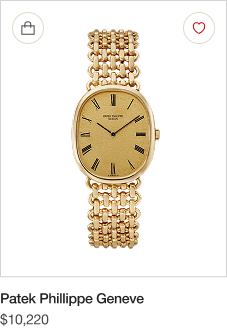
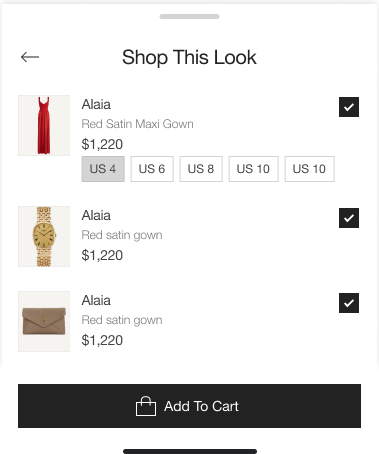
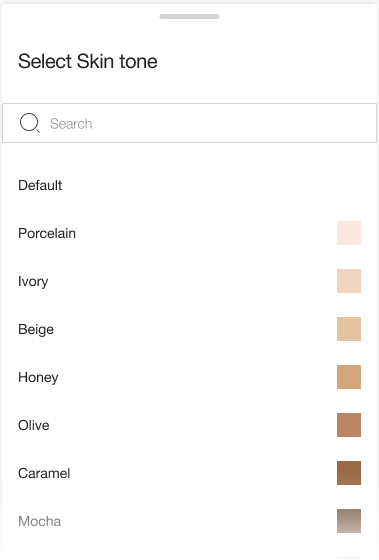
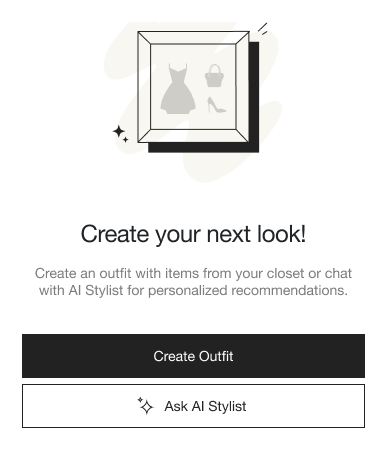
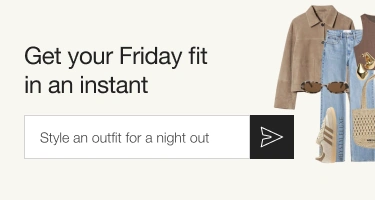
Product cardAI promptPremium upsellCart item · saleEditorial look cardEvents nudgeShop this lookVoice searchSkin tone · try-onOutfit cardEmpty state · AI entryAI prompt cardAI entryStylist earningsCollection bannerCart item · full price
Chapters
Six modules. One product.
Chapter 01
Personalized homepages
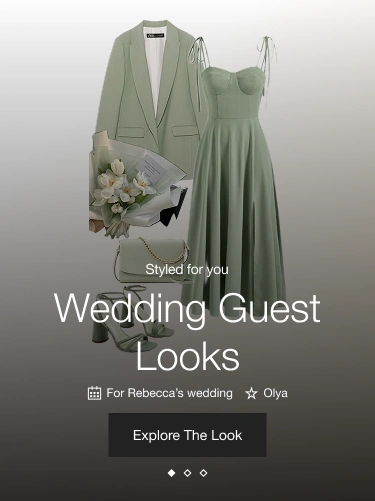
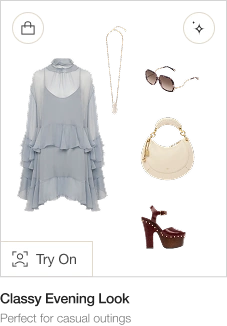
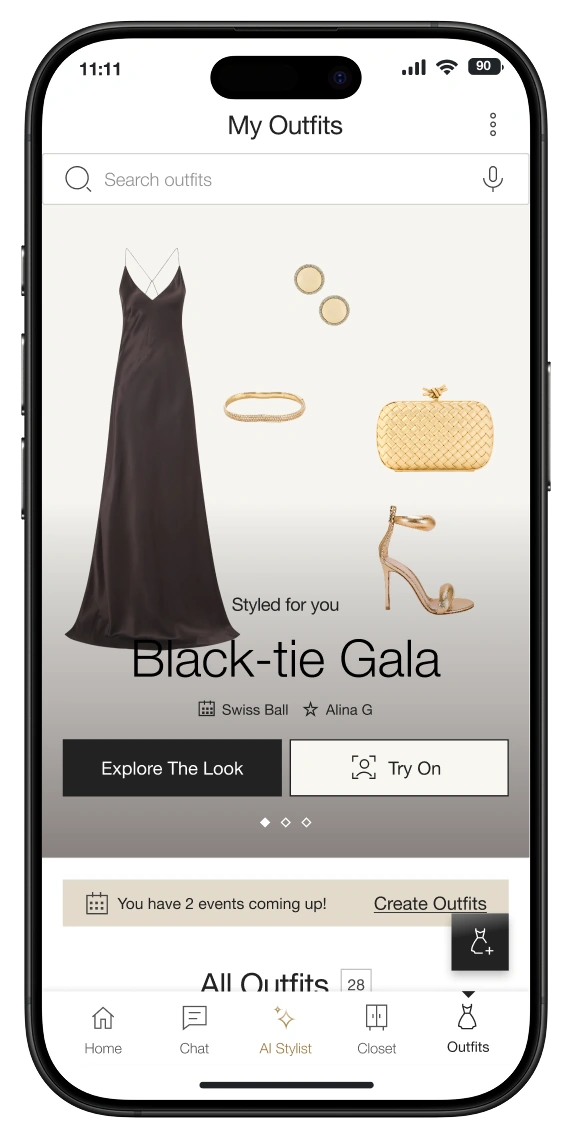
Three audiences, three homepages. Shoppers and clients open on weekly try-ons across diverse avatars, followed by stylist picks, new arrivals, edits and a direct way into the AI Stylist. Guests get a lighter introduction to the product.
Homepage · The ShopperStyled looks firstHomepage · The StylistAI assistant + earnings firstHomepage · The GuestA lighter introduction
Every screen scrolls on its own. Hover to pause, click for the full page.
Homepage · The Guest on web
Chapter 02
Curated Looks + AI Styling
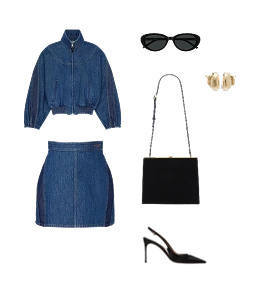
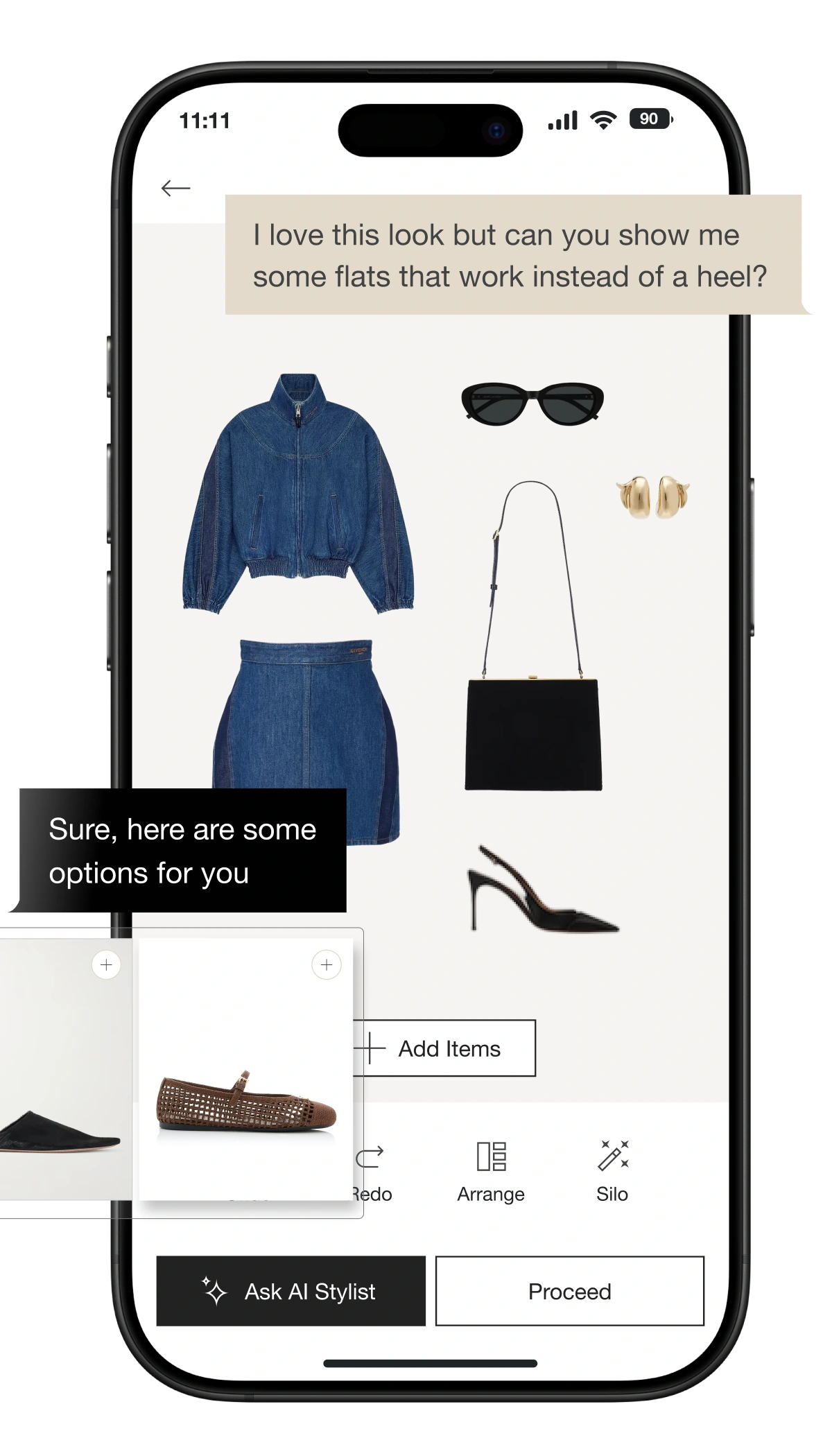
BeforeA static canvas, one undifferentiated product list, and AI help in a separate chat.AfterThe AI Stylist lives inside the canvas. Ask for ideas while you build.
Auto-arranged compositions, auto-filled outfit details, image-based search, looks built from a reference photo, and a calendar to plan ahead. The canvas is a flat lay, so that's how it's shown here.
Embedded AI Stylist, closet/wishlist tags, auto-composition
Before · old canvas
Bottom-sheet product list
BeforeAfter
Drag to compare the real screens. Plus an 8–10s recording of the AI Stylist inside the canvas.
Chapter 03
Closets and wardrobe management
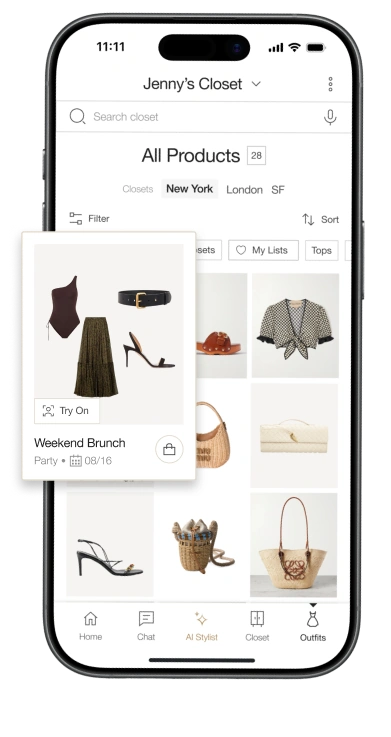
BeforeEverything in one list.AfterCloset, wishlist and stylist-recommended pieces, each with its own clear treatment.
Chapter 04 · ✦ AI
AI Stylist + try-on
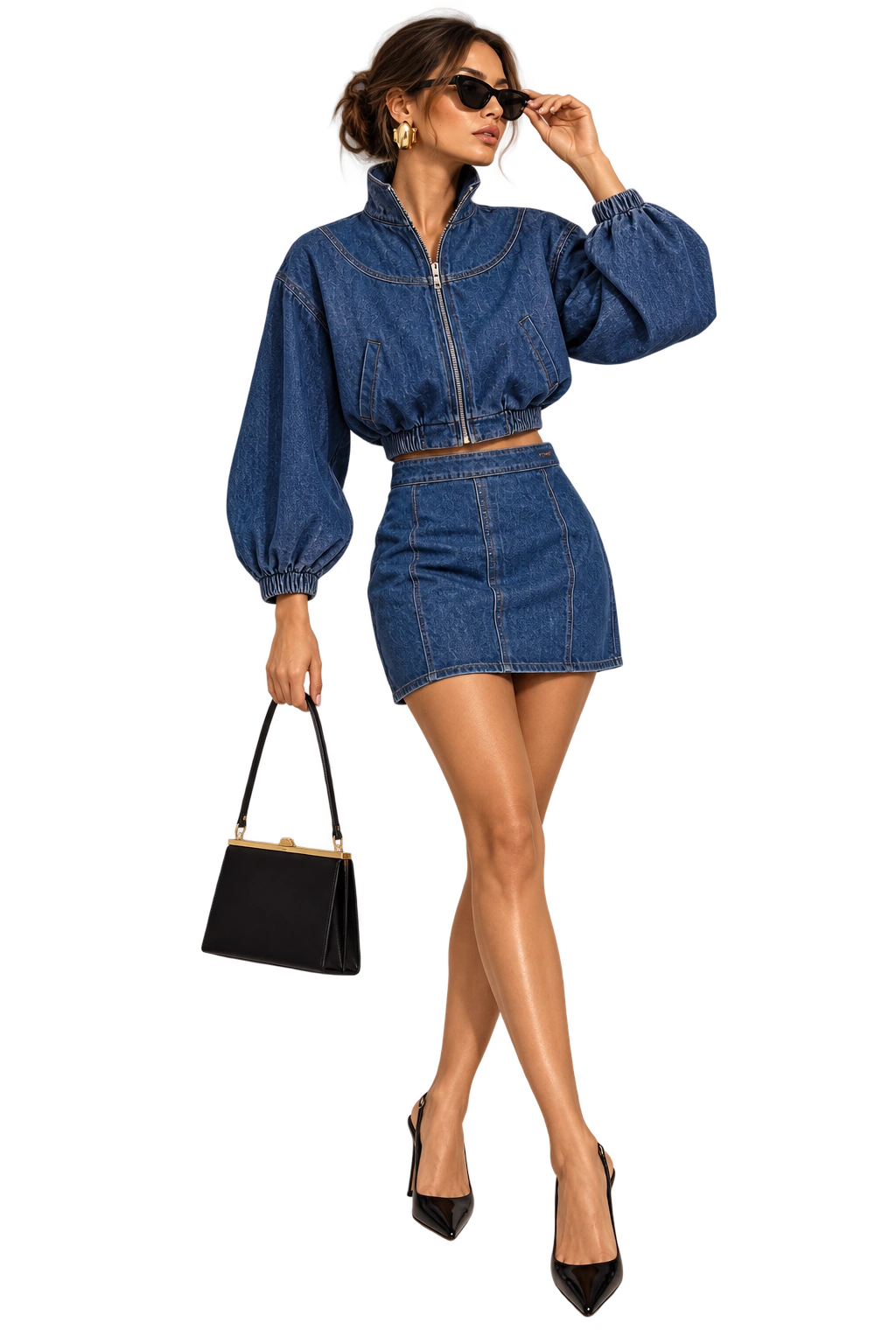
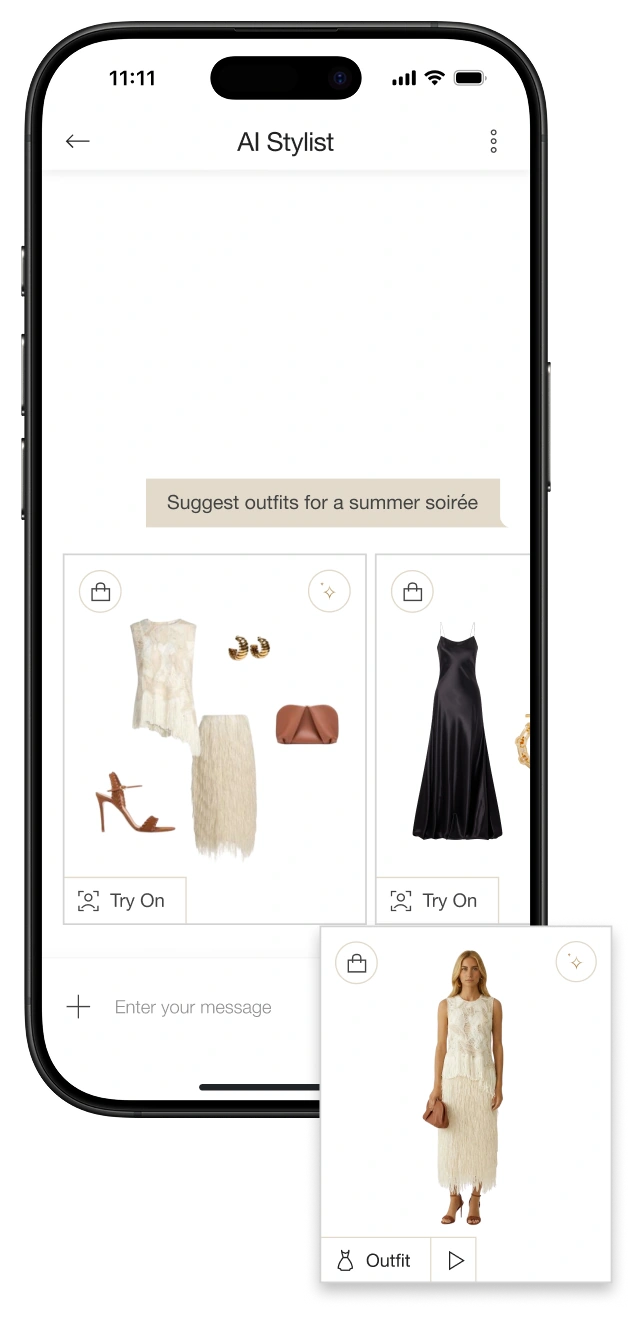
BeforeType a query, get a wall of products. It felt like search.AfterStyled outfits in the chat, and try-ons at the moment of purchase: see it on you, see what pairs with it.
Before: a wall of results
Something chic for dinner
Chapter 05
Stylist dashboard
Built around a stylist's actual job: performance and client roster first, turning data into next steps. This is the answer to "Won't I rather just use Excel?"
Hover to scroll · click for the full screen
Chapter 06
Checkout & consignments
BeforeOne cart, one buyer. Stylists ordering for clients had to work around the flow, especially on returns.AfterCheckout was rebuilt around how stylists actually buy: shopping for several clients in one go, managing consignment orders, and handling returns on their behalf. Shoppers got promo codes and easier payments along the way.
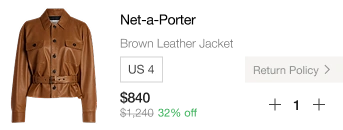
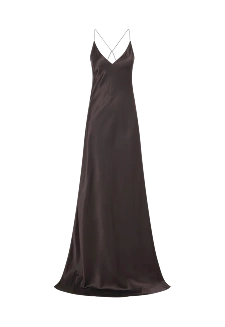
Draped jersey gown$1,180
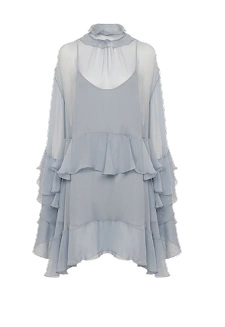
Ruffled chiffon blouse$640
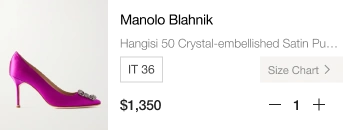
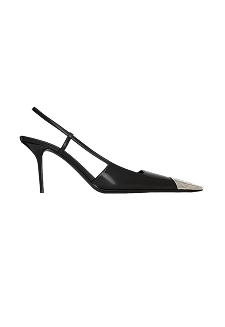
Slingback pumps$895
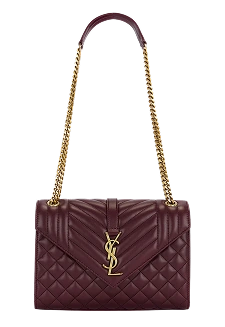
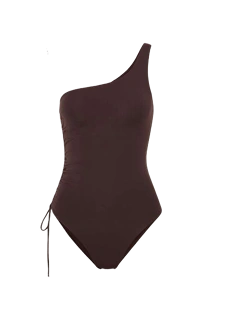
One-shoulder swimsuit$320
vêtir
Tap on a product
Engineering
From two systems to one language.
Rolling the system out module by module meant components arrived gradually, instead of a disruptive handoff. Engineering adopted the new components, and once we added an AI-assisted Figma-to-code workflow, variables and components mapped almost one-to-one into code.
01Design QA pass after every feature ships
02Interaction docs for each redesigned module
03On-call handovers for edge cases and missing states
04Design work tracked in Jira alongside engineering
For stylists
The Stylists’ Studio
Stylists were Vêtir's growth engine: each one brought their own clients. So the product grew a toolkit around a stylist's working day: commissions on every client purchase, digitized client closets, AI-assisted styling, a look calendar, invoicing and a performance dashboard.
Together, they made Vêtir a place where a stylist could run their whole business.
Earn & grow
Run the business
Outcomes
Finally, it looked the part.
13×
Stylists on the platform (~14 → 190), as it became something stylists could run their business on.
↑ organic
More search traffic and orders after the type and hierarchy overhaul.
–40% drop-off
Lower drop-off, higher engagement. More active users, longer sessions.
12K users
7.4M interactions since launch.
Customer favorite
Lifestyle
User or avatar shot
Try-on
Avatar still
"Personalized, chic, and finally in line with luxury fashion."
Users & stylists paraphrased, real quote?
Relevant styling advice, right on the homepage.Seeing yourself in the pieces before you buy.